What Can a Medical Virtual Assistant Actually Do for Your Practice?
What does a medical virtual assistant do? When clinic owners first hear about medical virtual assistants, the first question is usually straightforward: what exactly do they handle? If you’re new to the concept, this medical virtual assistant overview explains how they support modern healthcare practices.
It’s a fair question. Most practices already have staff managing day-to-day operations, so it’s not always clear where a virtual assistant fits in.
The reality is, a large part of running a clinic happens behind the scenes. Scheduling, follow-ups, documentation, and patient communication all need to run consistently. When any of these fall behind, it creates a ripple effect across the entire practice.
A medical virtual assistant steps in to take care of these administrative responsibilities so your team can stay focused on patient care. These responsibilities are part of a broader system outlined in this complete medical virtual assistant guide.
TL;DR: What Does a Medical Virtual Assistant Do?
A medical virtual assistant (MVA) performs the administrative tasks that keep a healthcare practice running efficiently. Common responsibilities include appointment scheduling, insurance verification, prior authorizations, patient communication, medical documentation, electronic medical record (EMR) support, referral coordination, and other non-clinical workflows that reduce the administrative burden on providers and in-house staff.
By handling these routine but essential responsibilities, MVAs help practices improve workflow, reduce scheduling bottlenecks, minimize missed appointments, and give physicians and clinical staff more time to focus on patient care.
Medical virtual assistants do not diagnose patients, provide medical treatment, prescribe medications, or make clinical decisions. Their role is to provide secure, healthcare-focused administrative support that improves efficiency while supporting HIPAA-compliant practice operations.

Board-certified gastroenterologist and Founder of MedGather. Read full bio →
Keeping Your Schedule Organized and Full
Appointment management is one of the core medical virtual assistant services that directly improves clinic efficiency.
Appointment management is one of the most important, and time-sensitive, parts of any practice.
It’s more than just booking patients. It involves handling reschedules, sending reminders, confirming appointments, and making sure there are no gaps or overlaps in the calendar.
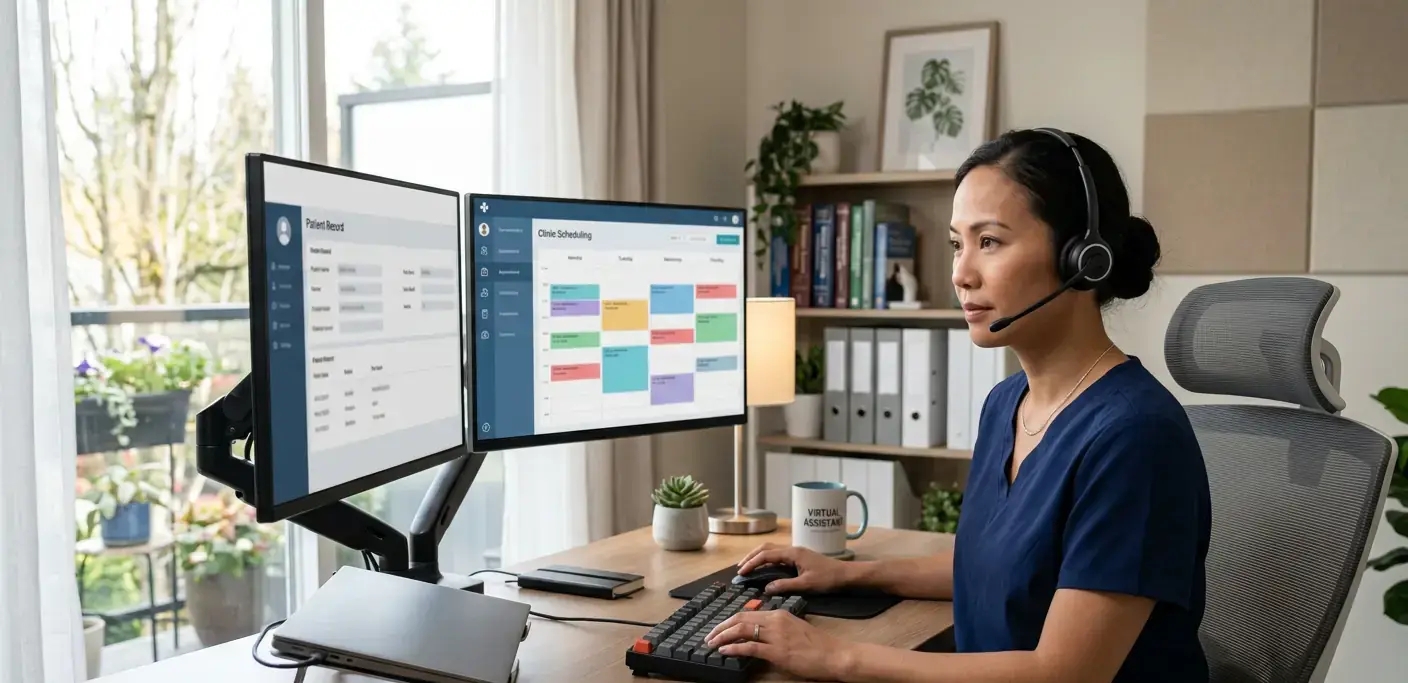
A medical virtual assistant helps manage all of this. They keep your schedule organized, reduce no-shows, and make sure every available slot is used effectively. Over time, this alone can have a noticeable impact on both revenue and workflow.
Following Up on Insurance and Claims
Insurance-related tasks are often pushed aside when things get busy, but they directly affect your cash flow.
Unfollowed claims, delayed responses, and unresolved denials can quickly pile up. A medical virtual assistant helps prevent that by tracking claims, following up regularly, and keeping everything moving.
Instead of revenue sitting in limbo, you have someone actively making sure it gets processed.
Many practices rely on structured workflows outlined in a medical virtual assistant guide to ensure consistent claims follow-up.
Improving Patient Communication
Patient experience doesn’t stop at the appointment. It includes every interaction before and after the visit.
Reminders, follow-ups, answering questions, and coordinating next steps all play a role in how patients perceive your practice.
A virtual assistant helps ensure that communication stays consistent and timely. Even during your busiest days, patients still receive clear and professional responses, which helps build trust and improve retention.
Supporting Documentation Without Adding to Your Workload
Documentation is necessary, but it can easily take up hours of your time.
From chart preparation to referral notes and pre-authorizations, the workload adds up quickly. A medical virtual assistant can help organize information, prepare templates, and keep everything structured.
You still handle the clinical decisions, but the administrative side of documentation becomes much more manageable.
Handling EMR and Administrative Tasks
Electronic medical record systems are essential, but they also come with a steady stream of administrative work.
Updating patient records, organizing charts, and managing data entry all take time. A virtual assistant trained in EMR systems can handle these tasks efficiently, helping you stay organized without pulling attention away from patient care.
Additional Ways They Can Support Your Practice
Beyond the core responsibilities, medical virtual assistants can also assist with:
- Prescription refill coordination
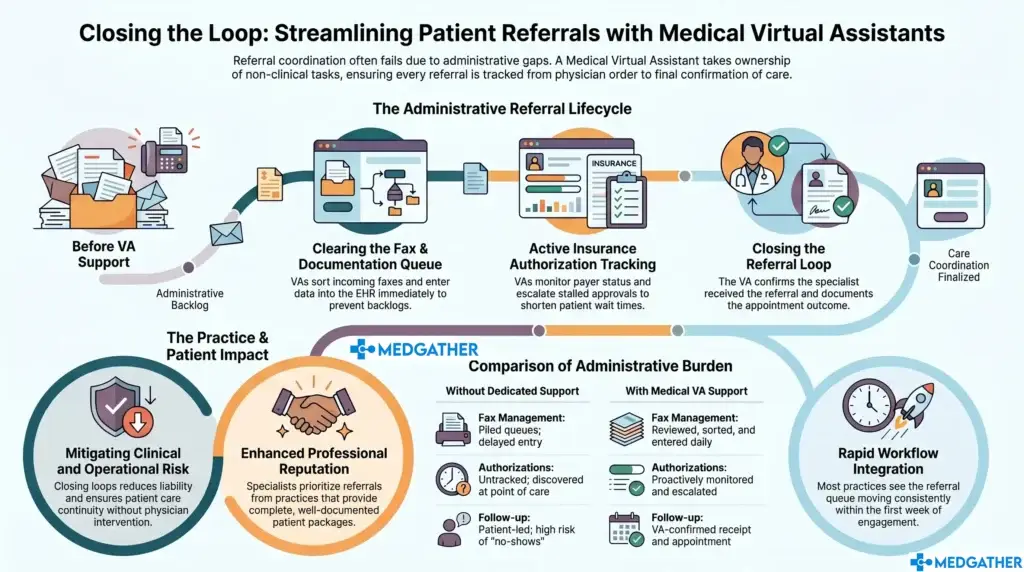
- Referral tracking and follow-ups
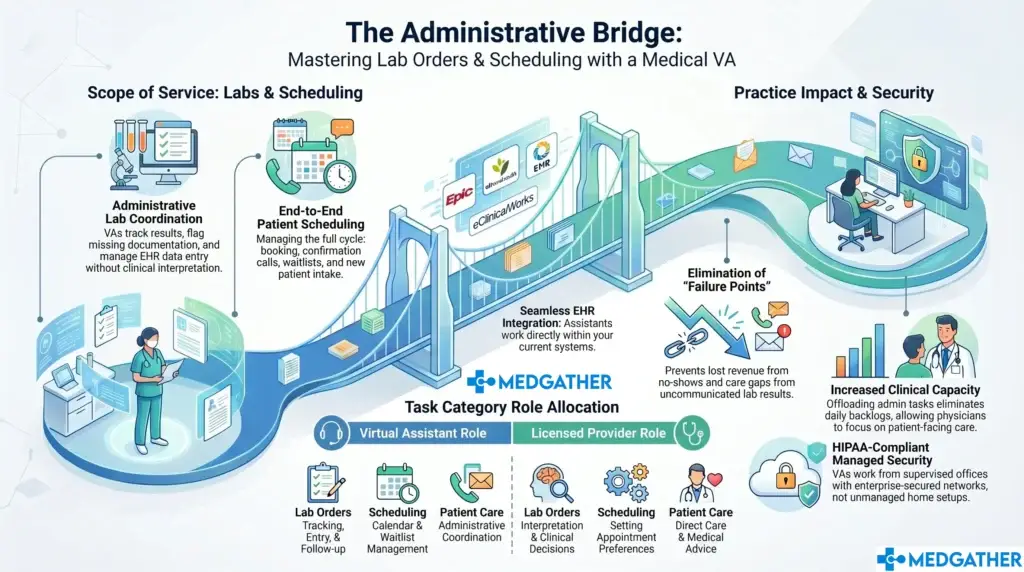
- Lab result monitoring
- Inbox and message management
- Basic billing inquiries
The role is flexible, which means you can prioritize the areas where your team needs the most support.
What Doesn't a Medical Virtual Assistant Do?
It’s important to be clear about boundaries.
Medical virtual assistants focus strictly on administrative tasks. They do not diagnose, treat, prescribe, or make clinical decisions.
Their purpose is to support your team, not replace it.

This ensures:
Why Are More Practices Turning to Virtual Support?
Many clinics today are dealing with increasing administrative demands while trying to maintain a high level of patient care.
By offloading routine tasks to a trained virtual assistant, your in-house team gains back time and focus. This often leads to smoother operations, better patient communication, and less day-to-day stress on staff.
Final Thoughts
A medical virtual assistant can take on a significant portion of the administrative work that keeps a practice running.
When those tasks are handled consistently and efficiently, your team can focus on what matters most, your patients.
If you’ve been feeling stretched or noticing gaps in your workflow, this type of support is worth exploring.
Want to see exactly what a medical virtual assistant can take off your plate?
MedGather's trained healthcare virtual assistants handle the full administrative stack for US clinics. Let's talk about what that looks like for your practice.
Frequently Asked Questions
What exactly does a medical virtual assistant do?
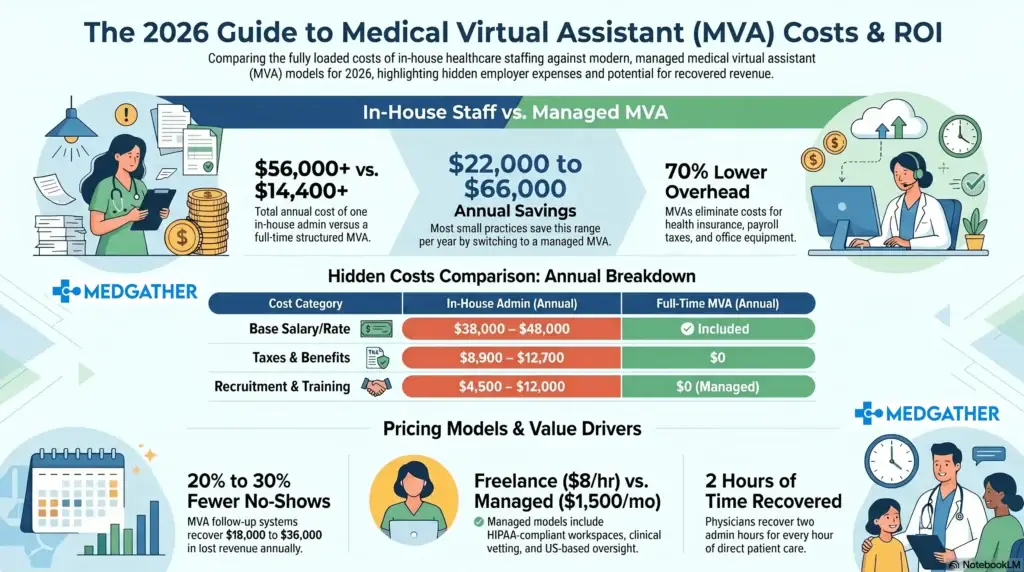
A medical virtual assistant handles the essential behind-the-scenes administrative operations of a clinic. Their daily tasks typically include organizing the schedule, communicating with patients, following up on insurance claims, and managing EMR data entry.
Can a virtual assistant help with clinic billing and insurance?
Yes. While things get busy in-office, insurance tasks are often pushed aside, negatively impacting cash flow. An MVA helps by consistently tracking claims, resolving denials, and following up with payers to keep revenue moving.
Do medical virtual assistants make clinical decisions?
No. Medical virtual assistants are strictly limited to administrative responsibilities. They are not licensed to diagnose, treat, prescribe, or make any clinical decisions for patients.
How do virtual assistants improve the patient experience?
The patient experience involves more than just the face-to-face appointment. MVAs ensure that patients receive consistent, professional communication by promptly answering questions, sending appointment reminders, and clearly coordinating the next steps in their care.
What kind of EMR and documentation tasks can they manage?
MVAs trained in EMR systems can handle the heavy data entry workload that often burns out providers. They can prepare charts, organize referral notes, process pre-authorizations, and keep patient records continuously updated.