Medical Virtual Assistant for Medical Practice
There is a ceiling that almost every growing medical practice in the United States eventually hits. It is not a clinical ceiling or a limit on the quality of care. It is an operational one. The practice is ready to grow, but the administrative infrastructure is not. Without the right support structure in place before demand increases, growth creates chaos instead of opportunity.
This article explains how to build that structure and why practices that scale sustainably are often the ones that adopt medical virtual assistant services before operational strain turns into a crisis.
TL;DR: How Can Growing Medical Practices Scale Without Overloading Their Staff?
As patient volume increases, many medical practices reach an operational ceiling where administrative work outpaces staff capacity. This often leads to physician burnout, employee turnover, slower patient service, and stalled practice growth.
Medical virtual assistants (MVAs) help practices scale by managing scheduling, insurance verification, prior authorizations, patient communication, documentation support, and other administrative tasks. Choosing a managed, HIPAA-conscious provider that operates from secure office facilities allows clinics to expand administrative capacity while enabling physicians and in-house staff to focus on patient care.

Board-certified gastroenterologist and Founder of MedGather. Read full bio →
What Is the Operational Ceiling That Limits Practice Growth?
When a medical practice is small, administrative work is often handled in an improvised way. Scheduling is managed by whoever is available. Insurance follow-ups happen when time allows. Patient communication is addressed only when the inbox becomes overwhelming.
This approach works temporarily, but it does not scale.
As patient volume increases, so does administrative complexity. More patients mean more appointments to coordinate, more insurance claims to process, more communication to manage, and more documentation to complete. When the clinical team absorbs this workload, growth begins to weaken the practice instead of strengthening it.
This is the operational ceiling.
Practices that hit this ceiling without a plan typically face two outcomes. They either limit their own growth to stay manageable, or they push forward and burn out their team. Neither outcome is sustainable.
Practices that scale successfully do not simply work harder. They build the right operational structure before demand exceeds their capacity.
For many, that structure includes a medical virtual assistant for medical practice operations, providing dedicated administrative support so clinicians can focus on patient care.
Why Isn't Local Hiring Always the Best First Step?
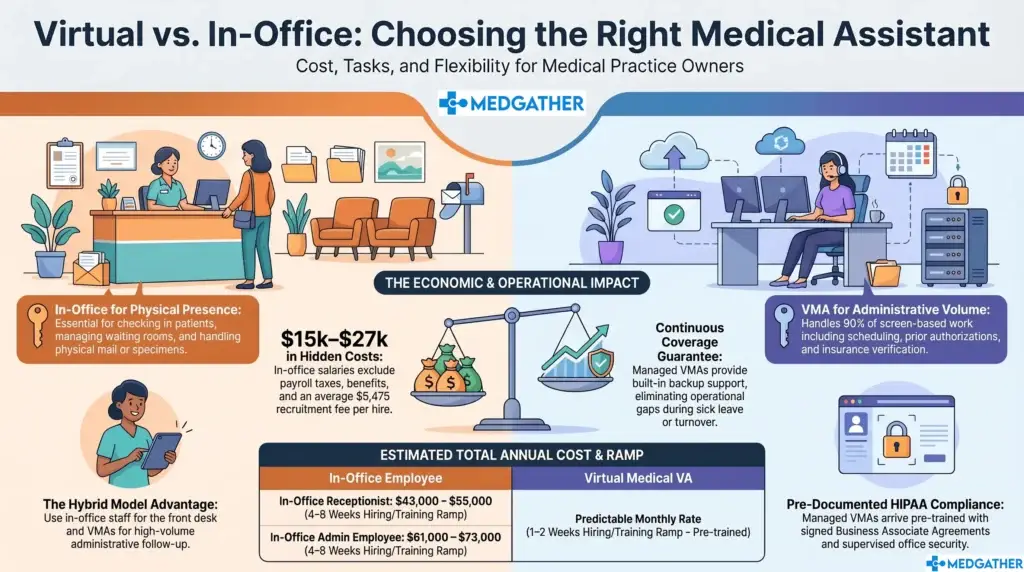
When administrative work increases, the natural response is to hire locally. In some cases, that is the right long-term move. However, the process of recruiting, onboarding, and retaining qualified staff is often slower, more expensive, and more complex than expected.
Staffing shortages across US healthcare systems have made hiring particularly challenging. According to the American Medical Association, administrative burden remains one of the leading contributors to physician dissatisfaction and staff turnover.
Source: American Medical Association. “AMA Physician Satisfaction Survey and Burnout Data.” Updated annually.
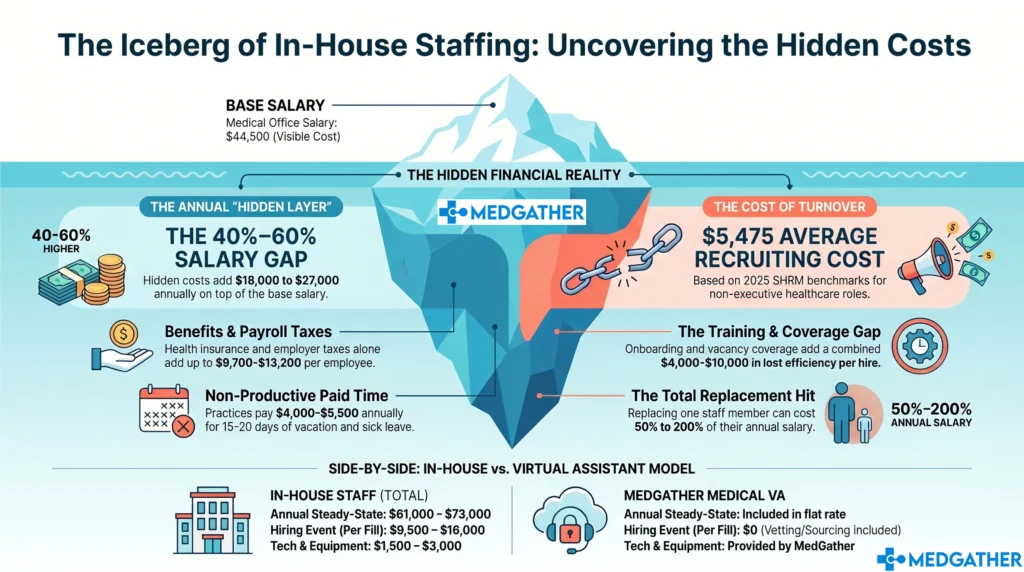
The real cost of hiring extends beyond salary. Training time, reduced productivity during onboarding, benefits, coverage for absences, and turnover-related disruptions all contribute to a higher total cost than most practices initially anticipate.
Many administrative roles in healthcare are also structurally difficult. High workloads, limited systems, and unclear processes often lead to burnout and frequent turnover. These are not isolated issues. They are predictable outcomes of under-supported environments.
This is why many practices are exploring alternatives like a medical virtual assistant for medical practice support, which offers faster deployment and more scalable solutions.
This is the operational ceiling.
Practices that hit this ceiling without a plan typically face two outcomes. They either limit their own growth to stay manageable, or they push forward and burn out their team. Neither outcome is sustainable.
Practices that scale successfully do not simply work harder. They build the right operational structure before demand exceeds their capacity.
For many, that structure includes a medical virtual assistant for medical practice operations, providing dedicated administrative support so clinicians can focus on patient care.
What Structured Administrative Support Actually Provides
Well-delivered medical virtual assistant services provide three critical advantages: consistency, capacity, and cost efficiency.
Consistency
Inconsistent processes are one of the biggest risks in under-resourced practices. Scheduling may vary depending on who handles it. Insurance follow-ups may be delayed. Patient communication may be inconsistent.
Over time, these small inconsistencies compound into larger operational issues.
A trained medical virtual assistant for medical practice workflows follows structured systems. Appointments are handled using consistent protocols. Claims are followed up on a defined schedule. Patient communication follows a reliable cadence.
Consistency creates stability, even during periods of growth.
This is the operational ceiling.
Capacity
One of the most immediate benefits of adding a healthcare virtual assistant is that administrative workload no longer scales directly with patient volume.
More patients do not automatically mean more stress for your clinical team. Tasks such as scheduling, documentation support, insurance coordination, and patient communication are handled by a dedicated resource.
This is what scaling without increasing workload truly looks like.
It is not about doing more with the same people. It is about assigning the right work to the right role.
Cost Efficiency
For growing practices, cost is always a factor.
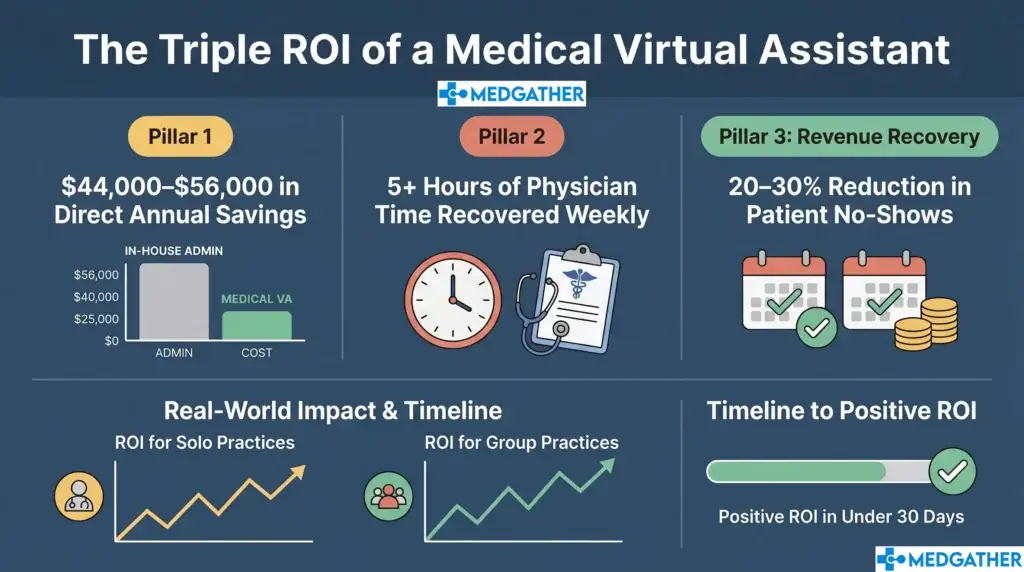
Hiring in-house staff involves salary, benefits, onboarding, and the risk of turnover. In contrast, a structured medical virtual assistant for medical practice teams offers a more predictable and often lower total cost without sacrificing quality or compliance.
This allows practices to build administrative capacity earlier, before operational strain begins to impact performance.

What Is the Compliance and Security Foundation Practices Need?
As practices grow, so does their exposure to compliance risk, particularly under HIPAA regulations.
More patients mean more data, more administrative touchpoints, and more potential points of failure if systems are not designed properly.
MedGather’s medical virtual assistant for medical practice services are built on secure facilities and HIPAA-compliant systems designed specifically for US healthcare operations.
This is not a general virtual assistant model. It is purpose-built infrastructure for medical administration.
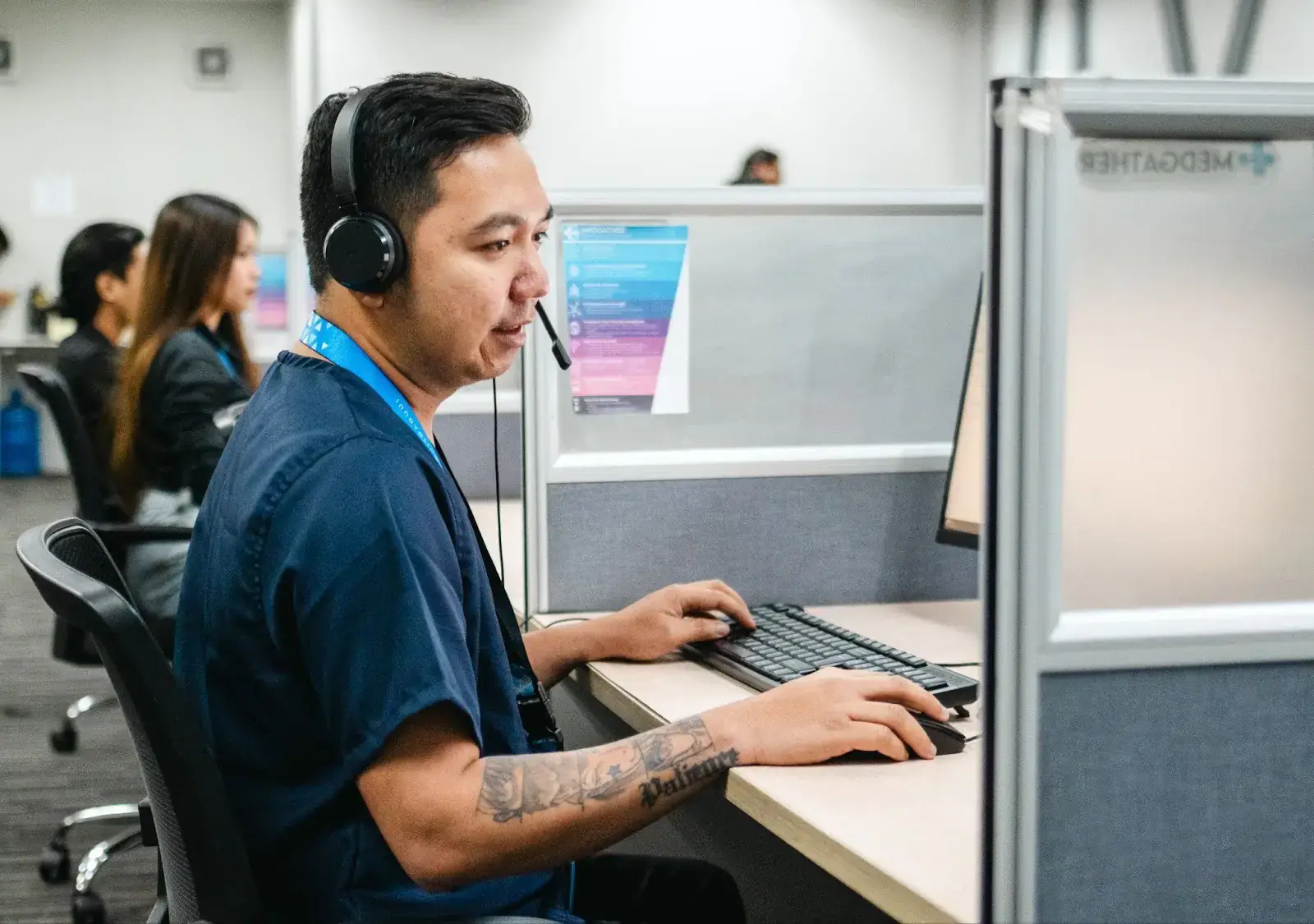
Unlike common assumptions about remote assistants working independently from home, MedGather operates from centralized, secure facilities that ensure accountability, consistency, and data protection.
For growing practices, this matters. Compliance requirements do not decrease with scale. They increase.
Building on a compliant foundation from the start ensures that growth does not introduce new risks.
What Key Tasks Does a Medical Virtual Assistant Handle for Medical Practices?
A healthcare virtual assistant works within HIPAA-compliant systems to manage the operational backbone of your clinic. Typical tasks include:
Appointment Coordination
Scheduling patients consistently and accurately
Insurance Follow-Ups
Ensuring claims are processed on time
Patient Communication
Sending reminders, follow-ups, and test results
Documentation Support
Assisting with EMR entries and chart updates
Administrative Oversight
Monitoring workflow efficiency and consistency
How Do Medical Virtual Assistants Maintain HIPAA Compliance and Security?
For US clinics, HIPAA compliance is non-negotiable. MedGather’s medical virtual assistants operate from secure office facilities, not home setups, with systems designed for healthcare administration.
This ensures:
- Proper infrastructure and access control
- Daily operational discipline
- Secure handling of patient data
Unlike generic virtual assistant services, a medical virtual assistant for medical practice designed for healthcare from the ground up ensures compliance and reduces risk.

Build the Foundation Before You Need It
The practices that scale successfully treat administrative infrastructure as a priority, not an afterthought.
They build systems before they break.
A medical virtual assistant for medical practice growth is not just a reactive solution. It is a proactive investment in sustainable operations.
If your practice is entering a growth phase, the real question is not whether you need better administrative support.
It is whether you are building that support now, while you still have the capacity to do it effectively.
Build the operational foundation your practice needs to grow.
MedGather provides structured, HIPAA-compliant medical virtual assistant for medical practice solutions designed for US healthcare providers who want to scale without increasing workload.
Frequently Asked Questions
What is the "operational ceiling" that limits medical practice growth?
The operational ceiling occurs when a practice is ready to grow, but its administrative infrastructure is unable to support that growth. As patient volume increases, so do the demands for scheduling, insurance processing, and patient communication. If a practice attempts to absorb this workload without a structured plan, it either artificially limits its own growth or forces its team into burnout.
Why might a practice choose a virtual assistant over hiring local administrative staff?
While hiring locally seems like the natural next step, it is frequently slow and costly due to ongoing healthcare staffing shortages. The true cost of local hiring extends well beyond the salary, encompassing training time, benefits, lost productivity during onboarding, and disruptions caused by turnover. Medical virtual assistants offer a faster, more scalable, and highly cost-efficient alternative to navigating the local job market.
What daily tasks can a medical virtual assistant take over?
A healthcare virtual assistant functions as the operational backbone of the clinic. Their core duties include appointment coordination, insurance follow-ups to ensure timely claims processing, patient communication such as reminders and test result delivery, and documentation support for EMR entries and chart updates
How do virtual assistants allow a practice to scale without increasing the clinical team's workload?
By assigning administrative tasks to a dedicated MVA, the stress on your clinical team no longer rises automatically with every new patient. MVAs introduce consistency by following strict protocols, expand the clinic’s capacity by taking over time-consuming tasks, and improve cost efficiency by providing predictable overhead. This ensures the right work is assigned to the right role.
Are these virtual assistants secure and HIPAA-compliant?
Yes, but this is a critical distinction between generic virtual assistants and specialized medical virtual assistants. Rather than working from home setups, structured services like MedGather operate from secure, centralized facilities designed specifically for US healthcare administration. This purpose-built infrastructure ensures proper access controls, strict data protection, and full HIPAA compliance.