How to Hire a Medical VA: What US Practices Need to Know Before They Start
Hiring a medical virtual assistant is not the same as hiring a general remote assistant. Healthcare workflows involve compliance requirements, structured processes, and sensitive patient data that require a different level of oversight.
A well-placed medical virtual assistant can significantly reduce administrative burden. A poorly matched one can create more work than it removes.
This guide walks through how US practices can approach hiring the right way, with a focus on clarity, compliance, and long-term success.
Hiring the right Medical Virtual Assistant starts with identifying the administrative tasks that consume the most time, then choosing a provider with healthcare experience, strong security standards, and a structured onboarding process. Unlike freelancers, office-based providers like MedGather offer supervised teams, HIPAA-focused workflows, and business continuity, helping practices reduce administrative workload while protecting patient data.

Board-certified gastroenterologist and Founder of MedGather. Read full bio →
Step 1: Get Clear on What You Actually Need
Before looking at any service or candidate, map out where your practice is losing the most time. Are prior authorizations piling up? Scheduling gaps and missed callbacks? Documentation backlog pushing into after-hours? Inbox volume that the front desk cannot keep up with?
The clearest hires are the ones where the problem is defined before the solution is selected. A VA matched to a specific operational gap is far more effective than one brought in to generally help out.
Step 2: Decide Between a Freelance Hire and a Structured Service
This is the most consequential decision in the process, and it is worth being direct about the tradeoffs.
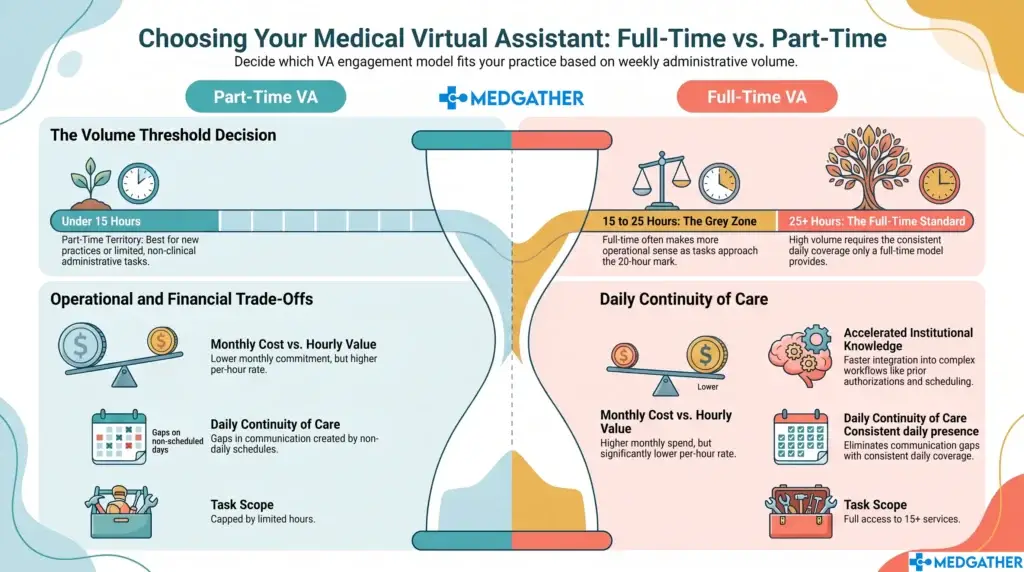
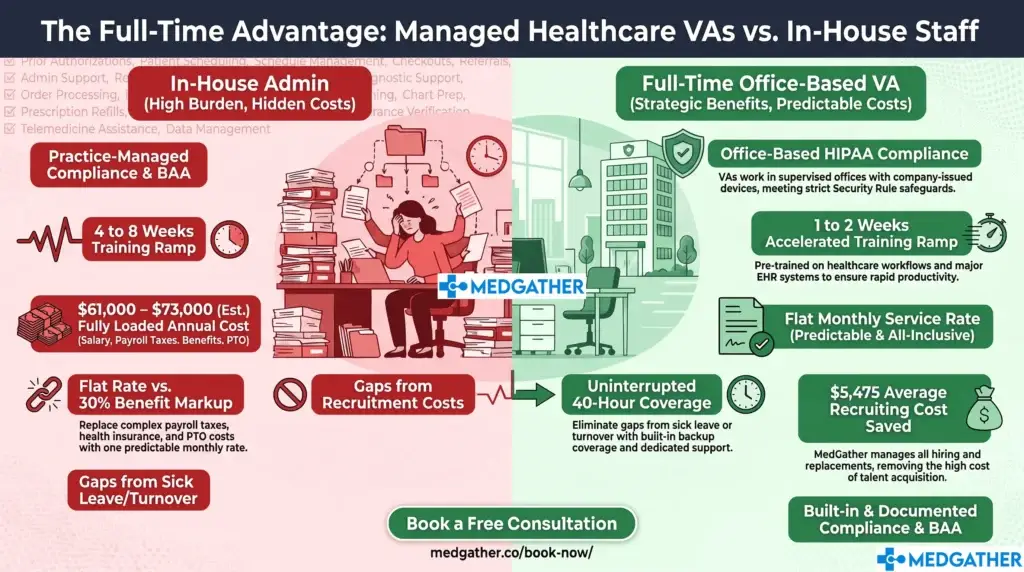
A freelance medical VA typically costs less upfront. But you are also taking on the management, oversight, and accountability structure yourself. If the person is unavailable, quality slips, or a compliance issue arises, it lands on your practice.
A structured VA service handles oversight, performance monitoring, and continuity on its end. You define the workflows and the access. They manage the rest.
For a healthcare practice where patient data is involved, the structured service model is almost always the more appropriate choice.
Step 3: Ask the Right Compliance Questions
Before engaging any service, these are non-negotiable:
- Will they execute a Business Associate Agreement before work begins?
- Do VAs work on company-issued equipment in a controlled environment?
- Is system access VPN-secured and logged?
- Do team members undergo background checks before placement?
- Is there documented HIPAA privacy training for VA staff?
A service that hesitates on any of these is not built for healthcare, regardless of what their website says.

Step 4: Evaluate the Onboarding Process
A VA who receives a quick overview and figures the rest out on the job is going to cost you time before they save you any. The right service does workflow mapping before placement, integrates into your specific EMR and scheduling systems properly, and has a defined ramp-up process.
Ask specifically: how does onboarding work, and what does the first 30 days look like?
Step 5: Look for Ongoing Support After Placement
The VA relationship does not end on day one. Quality services maintain oversight after placement, address performance issues proactively, and provide continuity planning if a team member is unavailable.
If the service model is essentially hire and goodbye, that is a gap worth noting.
How Does MedGather Handle This?
MedGather’s process is built around all five of these steps. Discovery and workflow mapping happen before placement. VA matching accounts for specialty, workflow complexity, and EMR familiarity. BAAs are executed with every client. The operating environment is supervised and office-based, not home-based. And support continues after the VA starts.
If you are ready to hire a medical VA and want to do it without the compliance risk or operational guesswork, the strategy call is the right place to start.
What Are the Common Mistakes When Hiring a Medical VA?
Many practices run into the same issues during their first hire:
- Hiring without clearly defined workflows
- Choosing based on cost alone
- Skipping compliance verification
- Expecting immediate productivity without onboarding
These mistakes often lead to:
- Frustration with the VA
- Rework for in-house staff
- Delayed ROI
Avoiding these early makes a significant difference in long-term success.
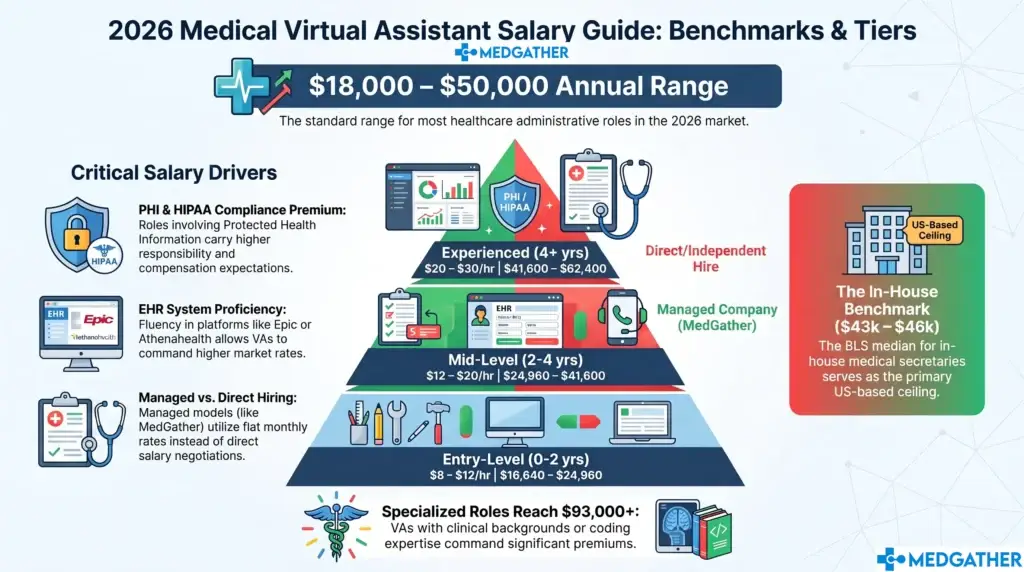
What Does It Cost to Hire a Medical Virtual Assistant?
Cost varies depending on:
- Level of experience
- Scope of tasks
- Whether you hire freelance or through a service
While freelance options may appear lower cost upfront, structured services often provide:
- Built-in oversight
- Backup support
- Compliance safeguards
For healthcare practices, this often leads to better long-term value despite a higher initial cost.
If you are ready to move forward, you can hire a medical virtual assistant through a structured, compliance-first process designed for healthcare practices.
Frequently Asked Questions
What is the first step a practice should take before hiring a medical virtual assistant?
Before looking at any service or candidate, a practice should clearly map out their specific operational gaps. Defining the exact problem—such as a backlog of prior authorizations, scheduling gaps, or an unmanageable inbox—ensures the MVA is matched to a specific need rather than just hired to “generally help out”.
Should a clinic hire a freelance medical VA or use a structured service?
While a freelance VA might have a lower upfront cost, the practice takes on the entire burden of management, oversight, and compliance. A structured service handles performance monitoring, continuity, and compliance safeguards on their end, which provides better long-term value and is almost always the more appropriate choice for healthcare environments.
What compliance questions are non-negotiable when hiring an MVA?
Practices must verify if the service will execute a Business Associate Agreement (BAA) before work begins. They should also confirm that VAs work on company-issued equipment in a controlled environment, use VPN-secured and logged systems, undergo background checks, and receive documented HIPAA privacy training.
What are the most common mistakes clinics make when hiring a medical VA?
The most frequent mistakes include hiring without clearly defined workflows, choosing an assistant based on cost alone, skipping essential compliance verifications, and expecting immediate productivity without a proper onboarding process. These errors often lead to frustration, delayed ROI, and rework for in-house staff.
How does the onboarding process impact the success of a new medical VA?
If a VA is just given a quick overview and left to figure things out on the job, they will cost the practice time instead of saving it. A proper onboarding process involves dedicated workflow mapping, correct integration into the practice’s specific EMR and scheduling systems, and a clearly defined ramp-up plan for the first 30 days.