What to Look for When You Hire a Medical Virtual Assistant
Searching for a medical virtual assistant feels straightforward until you realize how many options look identical on paper. Same service descriptions. Same compliance claims. Same promises.
The difference shows up after you’ve already committed.
Before you hire, here are the things actually worth vetting.
Before hiring a Medical Virtual Assistant, evaluate more than hourly rates. Look for healthcare experience, EMR proficiency, HIPAA compliance, secure office-based operations, business continuity, structured onboarding, and ongoing support. Providers like MedGather deliver supervised, HIPAA-focused virtual assistants with established workflows and continuity plans, helping practices reduce administrative burden without compromising security or patient care.

Board-certified gastroenterologist and Founder of MedGather. Read full bio →
1. Healthcare-Only Experience
A medical virtual assistant is not the same as a general remote admin who lists medical tasks on their profile.
The two differ in workflow knowledge, terminology familiarity, and understanding of how clinical environments function.
Before hiring, ask what percentage of the service’s experience or client base is healthcare-specific.
A team that works exclusively with medical practices brings a higher level of readiness than one that rotates across industries.
2. Specialty and EMR Familiarity
Prior authorization workflows in a GI clinic differ significantly from those in a mental health practice.
Insurance verification processes, documentation standards, and payer behavior vary by specialty.
The closer a medical virtual assistant’s background is to your specific environment, the shorter the adjustment period.
Ask whether they have worked with your EMR system before. This single question can save weeks of retraining after placement. Here is the full list of medical virtual assistant tasks
3. Where They Actually Work
This point is often overlooked.
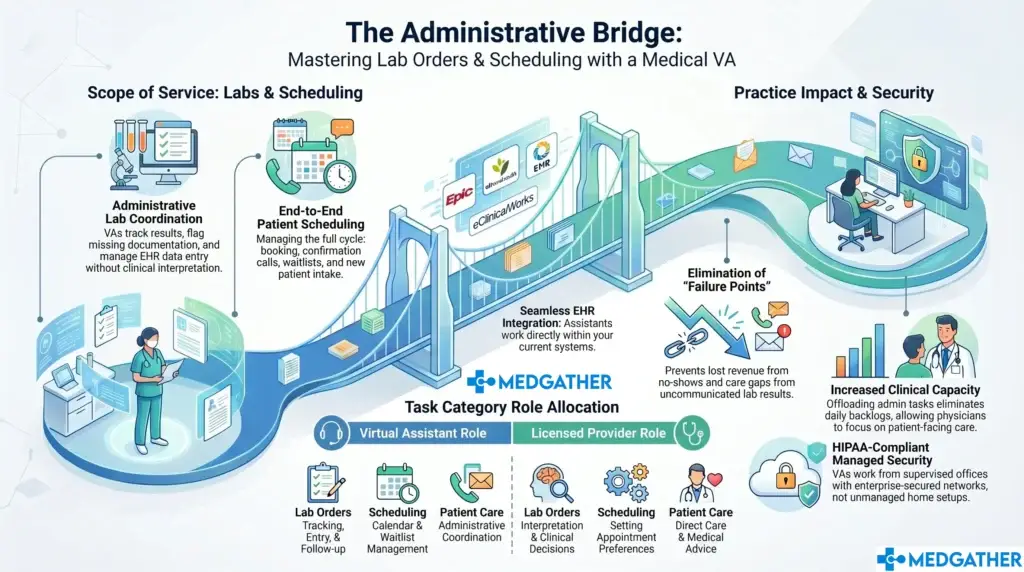
A medical virtual assistant working from home on a personal device with no oversight is a fundamentally different setup from one operating inside a supervised, access-controlled office environment.
In healthcare, unmonitored environments are where compliance exposure begins.
Secure office facilities with company-issued devices, VPN-secured access, and logged sessions are not premium add-ons. They are baseline safeguards in healthcare operations.
4. Whether There’s a Real Continuity Plan
Every medical virtual assistant will eventually be unavailable.Sick days, personal circumstances, and unexpected events are part of any staffing model.
The question is not whether it will happen, but how the service handles it when it does. A structured service should have a documented backup plan.
If the answer is vague or improvised, that is worth knowing before you start, not after a gap appears in your workflow.
5. How Deep the Onboarding Goes
The best services map your workflows before placement, not after.
Ask what the first 30 days look like in practical terms.
If the answer is unclear, the ramp-up period will likely be slower and more disruptive than expected.
6. What Support Looks Like After Placement
Ongoing support is where many services fall short.
Task reporting, performance monitoring, and regular check-ins should be part of the arrangement, not optional add-ons.
A service that handles placement and then steps back is not providing a managed solution. It is transferring responsibility back to your team.
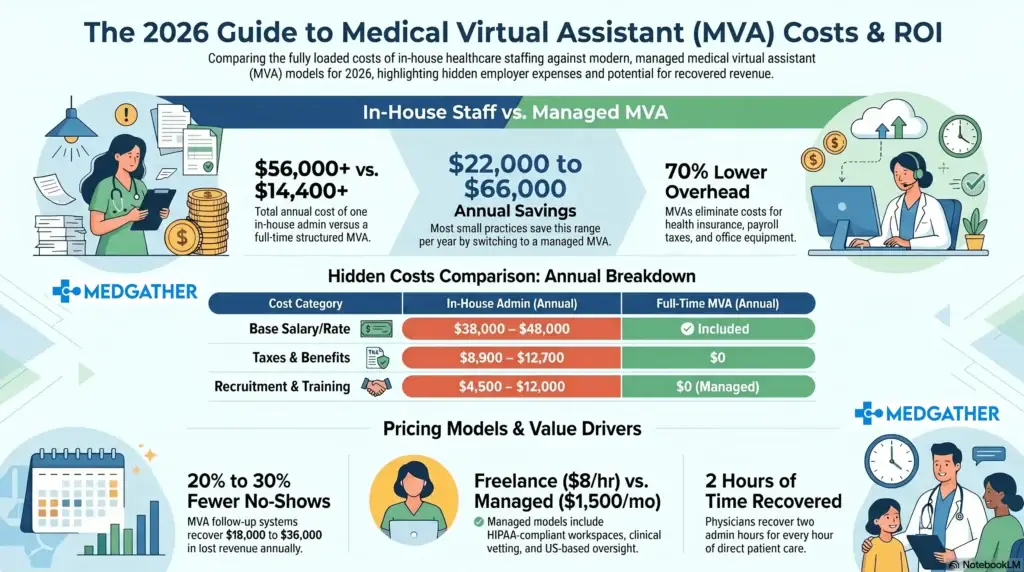
7. Why Price Shouldn't Be the First Filter
Medical virtual assistant pricing varies widely across the market.
The cheapest option rarely accounts for what is missing: compliance structure, backup coverage, oversight, and continuity.
The more relevant question is not cost per hour, but what you are actually getting when the arrangement is tested in real operations.
How Does MedGather Approach This?
MedGather’s medical virtual assistant teams work from supervised, office-based facilities with company-issued devices, VPN-secured access, and a strict no-personal-devices policy on the operations floor.
Business Associate Agreements are executed with every client before work begins. Onboarding starts with workflow mapping specific to your specialty.
Support continues well after placement, not just during the initial transition.
Only 39.5% of medical groups report administrative staffing at 90% or better of optimal levels (Medical Economics, 2023).
Bringing on a remote medical virtual assistant is meant to close that gap with a stable, compliant arrangement, not add another layer of management to an already stretched team.
Hire With Clarity, Not Just Urgency
A medical virtual assistant hire is a structural decision. Ask the right questions before committing, and the arrangement is far more likely to work as intended from the start.
Frequently Asked Questions
Why is it important to hire an MVA with healthcare-only experience?
A general remote admin is not the same as a dedicated medical assistant. Dedicated MVAs possess crucial workflow knowledge, familiarity with medical terminology, and an understanding of how clinical environments function. Asking if a team works exclusively with medical practices ensures they bring a much higher level of readiness to your clinic.
Why does the MVA's physical working environment matter?
An MVA working from home on a personal device creates significant compliance exposure due to a lack of oversight. In healthcare operations, secure office facilities equipped with company-issued devices, VPN-secured access, and logged sessions are baseline safeguards, not just premium add-ons.
What should a clinic look for regarding a continuity plan?
Sick days and personal emergencies are inevitable in any staffing model. A reliable MVA service must have a documented backup plan to handle unexpected absences. If a service’s plan is vague or improvised, your practice will experience disruptive gaps in workflow when those absences occur.
What should the MVA onboarding and support process look like?
The best services map your clinic’s workflows before placement and provide a clear, practical plan for the first 30 days. After placement, they should also provide ongoing support—such as task reporting, performance monitoring, and regular check-ins—rather than leaving all the management responsibilities to your in-house team.
Why shouldn't price be the primary filter when choosing an MVA service?
While pricing varies widely, the cheapest option on the market usually achieves that low price by cutting out essential operational safety nets. Cheaper options rarely account for compliance structure, backup coverage, oversight, and continuity. Practices should evaluate what they are actually getting when the arrangement is tested in real daily operations, rather than just looking at the hourly cost.