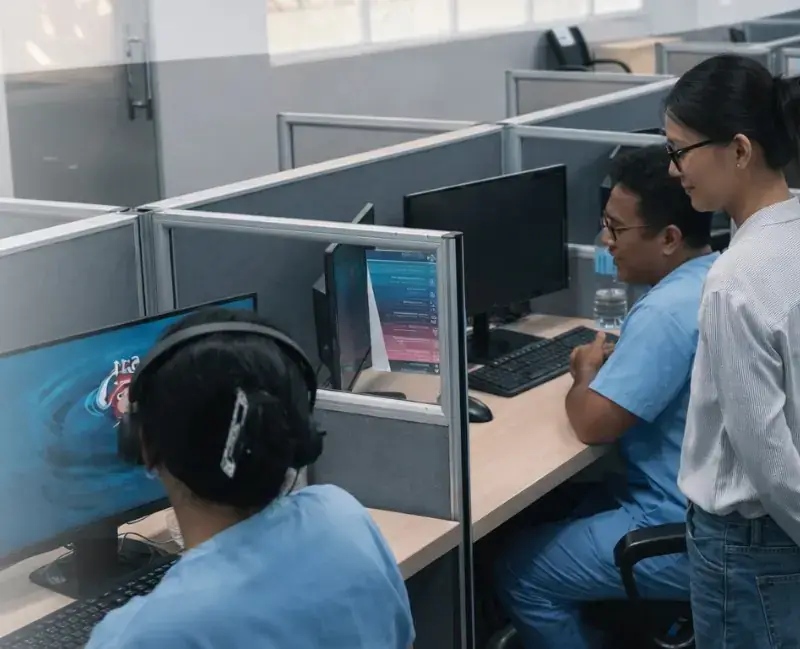
Stop Letting Paperwork Slow Down Your Practice
The paperwork problem in American healthcare is not new, and it is not improving on its own. Across clinics, healthcare professionals are spending more time on administrative tasks than ever before. The consequences are visible in burnout rates, staff turnover, and lost time that should be spent with patients.
This is a structural problem, not a personal productivity issue. Like most structural problems, it requires a structural solution.
This is a structural problem, not a personal productivity issue. Like most structural problems, it requires a structural solution.
How a Medical Virtual Assistant for Medical Practice Solves Administrative Overload
For every hour spent with a patient, physicians often spend nearly two additional hours on administrative work and electronic health record (EHR) documentation. According to a study published in the Annals of Internal Medicine, physicians spend more than half their day on desk work instead of face-to-face care, with administrative work often spilling into evenings at home (Sinsky et al., 2016
).
This is not a time management problem. Clinicians spending hours on tasks that should be handled by a trained administrative professional are working in a system that misallocates time. The solution is not to work faster but to redesign the administrative workflow.
A medical virtual assistant for medical practice removes this burden by taking over appointment coordination, insurance follow-ups, patient communication, and EMR documentation support. This allows clinicians to focus fully on patient care without the invisible second job of administration.
A medical virtual assistant for medical practice removes this burden by taking over appointment coordination, insurance follow-ups, patient communication, and EMR documentation support. This allows clinicians to focus fully on patient care without the invisible second job of administration.

Key Tasks Handled by a Medical Virtual Assistant for Medical Practice
A healthcare virtual assistant works within HIPAA-compliant systems to manage the operational backbone of your clinic. Typical tasks include:
Appointment Coordination
Scheduling patients consistently and accurately
Insurance Follow-Ups
Ensuring claims are processed on time
Patient Communication
Sending reminders, follow-ups, and test results
Documentation Support
Assisting with EMR entries and chart updates
Administrative Oversight
Monitoring workflow efficiency and consistency
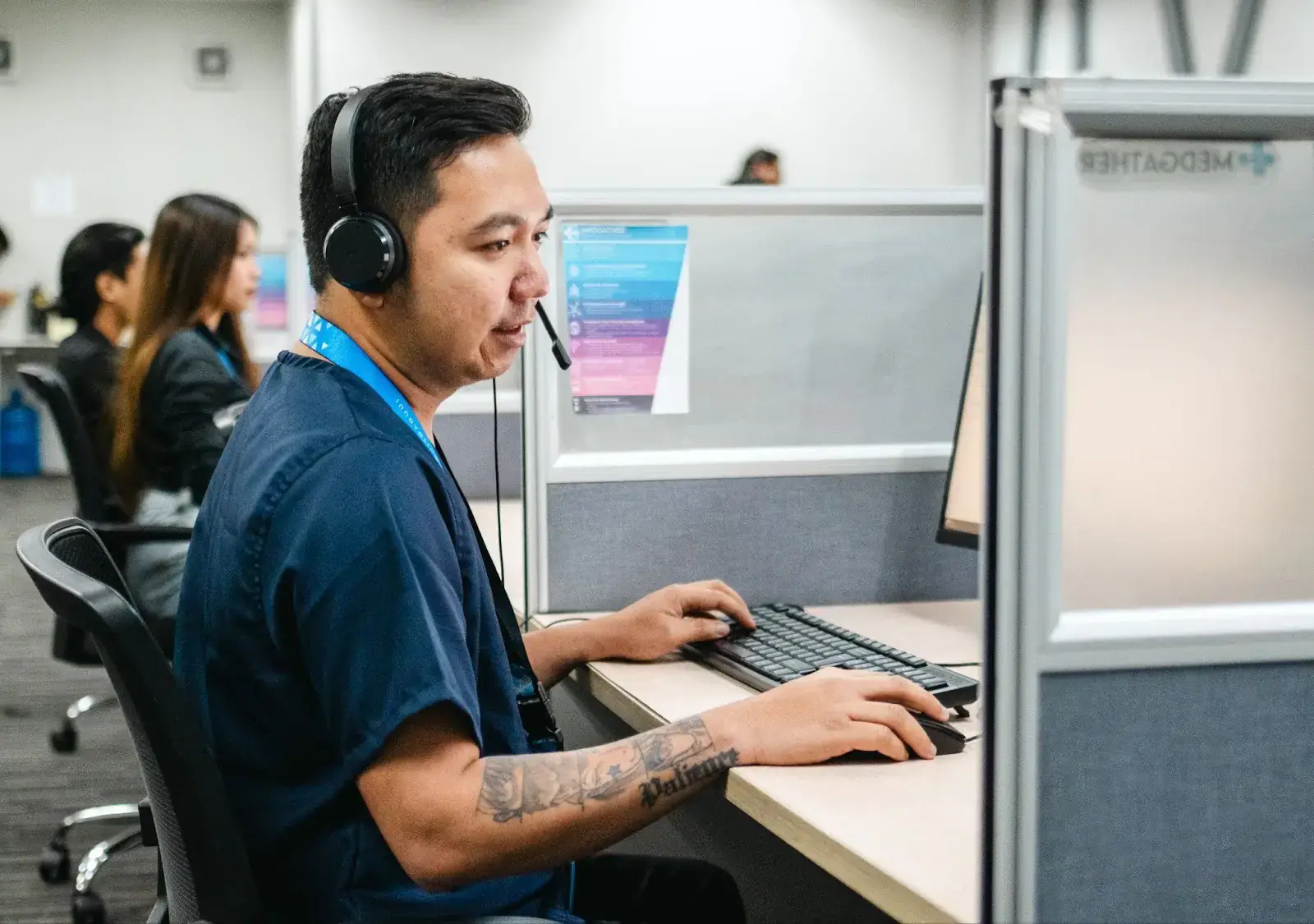
The Financial Cost of Paperwork
Administrative burden is not only a time issue, it has a financial impact.
The cost of in-house administrative staff extends beyond salary. Training takes weeks, during which the employee is not fully productive. Supervision by existing staff further reduces efficiency. Add benefits, sick leave, and turnover costs, and the real expense is often much higher than initially budgeted.
A 2019 analysis in Health Affairs estimated that administrative costs account for roughly 34 percent of total US healthcare expenditures (Himmelstein et al., 2019
). At the practice level, inefficiencies manifest as delayed insurance claims, gaps in scheduling, inconsistent patient communication, and operational stress.
Structured administrative support, such as a medical virtual assistant for medical practice, reduces these costs while improving revenue collection and patient retention.
Why Traditional Hiring Models Are Not Enough
The common solution, hiring more administrative staff; works in theory but struggles in practice.
Staff turnover is high due to compensation pressures, workload expectations, and limited career growth. Many administrative roles are under-supported, leading to frequent recruitment cycles. This creates a costly pattern: new hires require training, existing staff cover gaps, and the cycle repeats (MGMA DataDive Provider Compensation
).
A medical virtual assistant for medical practice solves this structurally by providing trained, dedicated support without the turnover risk.
HIPAA Compliance and Security for Medical Virtual Assistants
For US clinics, HIPAA compliance is non-negotiable. MedGather’s medical virtual assistants operate from secure office facilities, not home setups, with systems designed for healthcare administration.
- Proper infrastructure and access control
- Daily operational discipline
- Secure handling of patient data
Unlike generic virtual assistant services, a medical virtual assistant for medical practice designed for healthcare from the ground up ensures compliance and reduces risk.

This ensures:
Sources:
AMA Burnout Resources: https://www.ama-assn.org/amaone/why-we-fight-reducing-physician-burnouthttps://www.ama-assn.org/practice-management/physician-burnout
Health Affairs study on admin costs: https://www.healthaffairs.org/doi/full/10.1377/hlthaff.2018.0723
MGMA | DataDive | Management & Staff Compensation Data