
A medical virtual assistant (MVA) is a remote administrative professional trained to support healthcare practices with non-clinical tasks. They work remotely but integrate into the daily operations of a clinic or healthcare organization.
Medical virtual assistants help practices handle routine administrative responsibilities that would otherwise occupy the time of physicians, nurses, and front-office staff.
Common responsibilities include:
By managing these operational tasks, medical virtual assistants allow healthcare professionals to focus on delivering quality patient care.

Healthcare practices face workforce shortages, rising costs, and growing administrative workloads. Here is why more clinics are turning to remote administrative support.
Healthcare professionals spend significant time on administrative responsibilities that do not directly involve patient care. Virtual assistants manage these tasks so clinical staff can focus on medical responsibilities.
Many clinics struggle to recruit and retain administrative staff. Training new employees repeatedly creates operational disruption and increased costs. Virtual assistants provide a stable remote workforce without in-office hiring.
Hiring in-house administrative staff involves salaries, office space, equipment, benefits, and training. Remote support helps practices manage these operational costs more effectively and scale without added overhead.
While medical virtual assistants do not provide clinical care, they support the administrative systems that allow healthcare organizations to function effectively.
Administrative tasks are essential but time-consuming. Virtual assistants handle many of these responsibilities so clinic staff can focus on patient interactions.
Medical virtual assistants assist with managing communication between patients and healthcare providers, including routine inquiries, appointment coordination, and follow-ups.
Maintaining organized patient records is essential for healthcare practices. Virtual assistants assist with documentation support and record organization to keep everything accurate.
Healthcare operations involve many interconnected processes. Virtual assistants help ensure these workflows operate smoothly across scheduling, communication, and documentation.
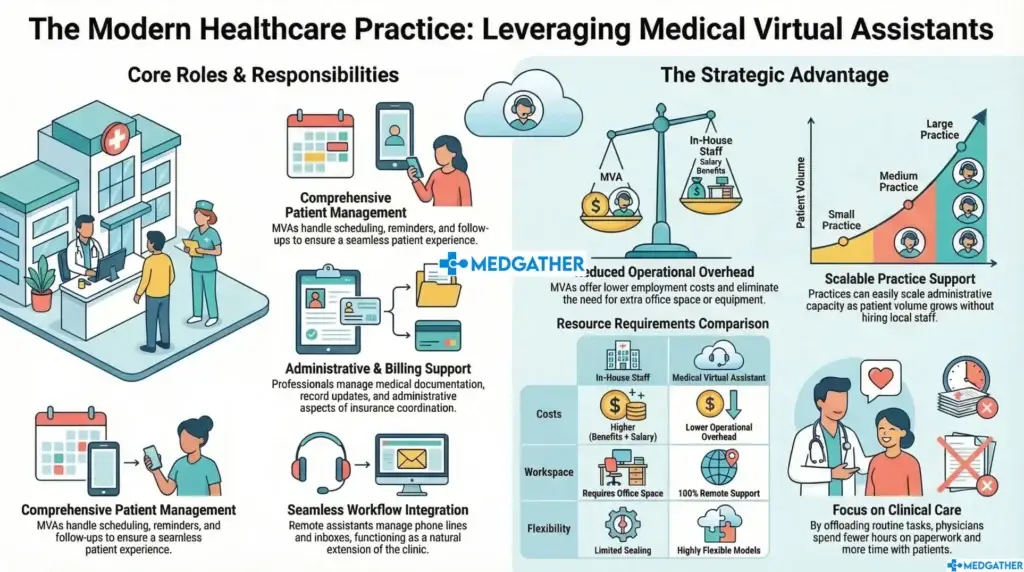
Appointment scheduling is one of the most common responsibilities handled by medical virtual assistants. They can schedule new patient appointments, manage cancellations and rescheduling, send appointment reminders, and coordinate calendar updates. This helps reduce missed appointments and improves scheduling efficiency.
Patient communication is critical to maintaining strong relationships and ensuring patients receive timely information. Medical virtual assistants can assist with responding to routine inquiries, coordinating appointment confirmations, managing follow-up communication, and assisting with patient reminders. Effective communication helps improve patient satisfaction and engagement.
Administrative documentation tasks can take significant time away from healthcare providers. Virtual assistants may assist with organizing patient records, updating administrative information, supporting documentation workflows, and managing document organization systems. This helps keep records accurate and organized.
Healthcare billing processes involve detailed administrative work. Medical virtual assistants can assist with organizing claim documentation, supporting billing records, and coordinating administrative information required for claims. These responsibilities help ensure billing processes remain organized and efficient.
Many healthcare practices receive large volumes of email and administrative requests each day. Virtual assistants can help manage email inbox organization, administrative requests, document handling, and operational coordination tasks. This allows in-house staff to focus on higher-priority responsibilities.
Virtual assistants take on time-consuming administrative tasks so healthcare providers can focus fully on patient care.
Timely responses to messages, scheduling updates, and follow-ups help improve patient satisfaction and retention.
When administrative tasks are managed effectively, clinic operations run more smoothly across all departments.
Virtual assistants provide scalable administrative support that adapts to the changing needs and growth of your practice.
Remote administrative support reduces operational expenses compared to expanding in-house teams with benefits and overhead.
Medical virtual assistants can support a wide range of healthcare organizations. They are particularly valuable for practices experiencing rapid growth or staffing challenges.

Some healthcare practices initially hesitate to consider remote administrative support because of concerns about outsourcing. However, many clinics find that virtual assistants complement their existing teams rather than replacing them.
Virtual assistants typically handle routine administrative tasks while in-house staff focus on patient-facing responsibilities. This collaborative approach can improve workflow efficiency and reduce staff burnout caused by administrative overload.
The staffing shortage reality across healthcare means that adding a virtual assistant layer is increasingly not a luxury — it is a practical operational necessity for practices that want to grow sustainably.
Healthcare organizations must protect patient information and maintain strong privacy practices. Any remote administrative support model should operate within secure workflows designed to safeguard sensitive data.
Responsible systems often include:

| Factor | In-House Staff | Medical Virtual Assistants |
|---|---|---|
| Office Space | Required | Not required |
| Employment Cost | Higher (salary + benefits) | Lower operational overhead |
| Hiring Cycle | Longer, recurring | Faster scaling |
| Staffing Flexibility | Fixed headcount | Flexible and scalable |
| Patient Presence | In-office | Remote support |
| Best For | Patient-facing roles | Administrative workflows |
Healthcare organizations often consider virtual assistants when administrative tasks start reducing operational efficiency. Common signs include:
Healthcare is evolving rapidly as practices adopt new technologies, telehealth services, and digital communication systems. Medical virtual assistants fit naturally into this evolving environment because they support digital workflows and remote communication tools.
Many healthcare organizations now use remote administrative support as part of a hybrid staffing model — combining in-person professionals with remote administrative specialists. This approach allows practices to maintain efficient operations while adapting to changing healthcare demands.
As telehealth grows and digital-first clinics emerge, the operational infrastructure supporting them must also evolve. Virtual assistants are a natural part of that infrastructure — serving as the administrative backbone for modern healthcare delivery.
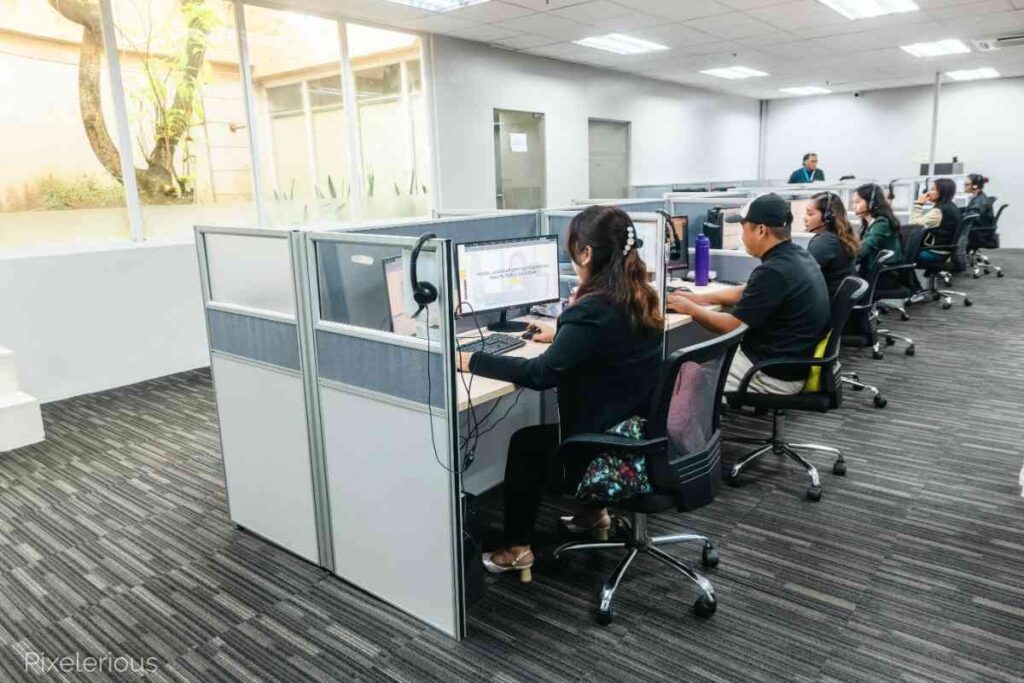
All team members work from supervised, controlled office facilities designed for secure healthcare administration.
A medical virtual assistant is a trained remote professional who handles non-clinical administrative tasks for healthcare practices. This includes appointment scheduling, patient communication, documentation support, billing coordination, and inbox management. Their role is to reduce administrative workload so clinical staff can focus on patient care.
Yes. Small practices often benefit the most. They frequently need additional administrative support but prefer not to expand their in-office team. A virtual assistant provides scalable support without the overhead of a full-time hire.
Yes — when operating within a structured, secure framework. Responsible virtual assistant providers use VPN-secured access, company-issued devices, permission-controlled systems, staff privacy training, and execute Business Associate Agreements (BAAs) with every client practice to protect patient information.
Costs vary depending on the provider, scope of services, and level of support required. Generally, remote administrative support is significantly more cost-effective than hiring additional in-house staff when you factor in salary, benefits, equipment, and office space. Contact MedGather for a tailored consultation.
Medical virtual assistants who support healthcare practices receive training related to administrative healthcare workflows. This includes understanding clinical terminology, healthcare communication standards, scheduling systems, and data handling protocols relevant to healthcare operations.
Yes. Virtual assistants often assist with appointment coordination, reminders, routine inquiries, and general administrative communication. They do not provide clinical advice but can handle the communication workflows that keep patients informed and engaged.
No. Virtual assistants complement existing staff by handling administrative tasks and helping reduce workload. In-house staff continue to manage patient-facing and clinical responsibilities, while virtual assistants support the operational and administrative layer.
Medical virtual assistants help clinics manage operational workloads while maintaining efficient patient communication. Let MedGather match your practice with the right administrative support.